 |
|
|
An Online Newsletter Showcasing Our Programs for the Month of May 2026! |
|
|
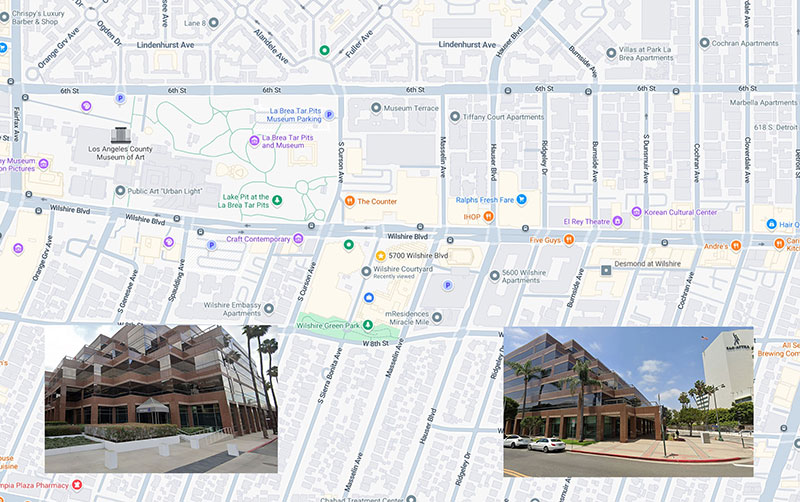
Welcome to the month of May, where we invite you to explore the depth and beauty of Japanese culture through a dynamic lineup of programs centered on craftsmanship, spirituality, and artistic tradition. This month features a special film screening of *Carving the Divine*, offering a rare look into Japan’s Buddhist woodcarving legacy, alongside a lecture and live demonstration on the resonant art of traditional Orin singing bowls. Our ongoing exhibition will be available for one more month highlighting the materials and techniques behind Buddhist visual culture across Asia, complemented by the final installment of our lecture series on modern and contemporary Japanese sculpture. You can also experience the meditative practice of Shabutsu in an interactive workshop, and look ahead to an online talk by Seikichi Izumi X on the centuries-old art of Urushi lacquer brush making. Our digital streaming service continues to grow with the addition of four new films this month. Members can access these latest titles immediately through JFF Online! One quick note: We've noticed that Google Maps has been incorrectly marking our location. Please make sure your search directs you to Mid-Wilshire, between Masselin and S Curson Ave. The entrance is located on Courtyard Place. You can find a map and street view of our building below for easy reference.
|
|
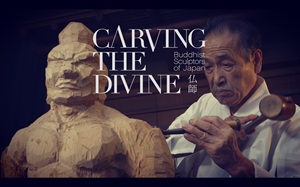 |
MOVIE SCREENING Carving the Divine (2020, 94 mins) is a documentary film that offers a rare look into a 1400-year-old Buddhist woodcarving tradition and the practitioners struggling to preserve its legacy in a rapidly changing Japan. Determined to pass his craft down to future generations, Master Koun Seki, the former apprentice of renowned Busshi, Kourin Saito, interviews a candidate applying to be his new apprentice. Quickly though, we discover this apprenticeship and the Busshi’s life to be far less glamorous, and much more austere, than we (or the Candidate) would’ve likely imagined.
|
|
|
LECTURE & DEMONSTRATION
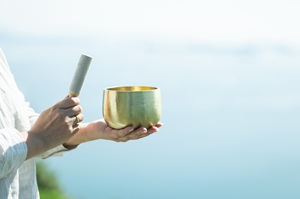
Shimatani Shouryu Studio was founded in 1909 (Meiji 42). Today, under the leadership of fourth-generation artisan Yoshinori Shimatani, the studio continues to craft orin (Japanese singing bowls) using traditional metal-hammering techniques, together with skilled craftsmen. Shoryu’s orin are shaped from a single sheet of brass, carefully formed by hammering. In the final stage, their distinctive sound is refined through a tuning process that has been passed down as a closely guarded tradition, resulting in their unique, resonant tones. A sound bath demonstration using Shimatani’s orin will be presented by sound body healer Yuki Uwasawa following the lecture.
|
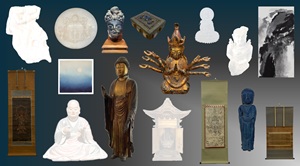 |
ART EXHIBITION Buddhist sutras explain that donating to projects like paintings and sculptures was a way for Buddhist devotees to accumulate good karma for themselves and their loved ones. Through this, they could be reassured of a good rebirth in a Buddhist paradise. This exhibition emphasizes the production of Buddhist visual culture across Asia and situates Japan’s Buddhist art within that context. By displaying Buddhist sculptures and paintings alongside the materials and tools that would have been used to create them, we show that Buddhist art is the result of skilled labor and quality materials. |
|
|
IN-PERSON LECTURE SERIES With the end of Japan's self-imposed isolation in the second half of the nineteenth century came an influx of new ideas and technologies from the West. The new Tokyo School of Fine Arts, established in 1887, selected sculpture instructors from both Japanese and international modes, such as Takamura Koun (1852-1934) and Vincenzo Ragusa (1841-1927). A growing interest in Japanese traditional art led to a small but significant resurgence of sculpture and sculpture-making that has continued to the present day. This is the final session of six monthly classroom-style lectures that trace the historical development of sculpture in Japan. These lively conversations explore Japanese sculptures from various time periods and mediums through in-depth explanations about how and why they were made. Participants will also encounter obscure topics related to sculpture-making in Japan.
|
|
|
WORKSHOP
Shabutsu is the practice of tracing the image of the Buddha by hand, sharing the same spirit as carving Buddhist statues. Buddhist images are not created as expressions of personal creativity, but as objects of devotion, following traditional guidelines. At the same time, there is a long-standing belief that the Buddha exists within all things, and through sincere practice, that presence can be revealed. In Shabutsu, a sheet of paper is placed over a model image, and the lines are carefully traced one by one. At the end, a personal prayer or wish is quietly written. More than an artistic activity, Shabutsu is a meditative practice filled with mindfulness and prayer. In this workshop, we invite you to experience the spirit and practice of Shabutsu together. |
|
|
ONLINE LECTURE
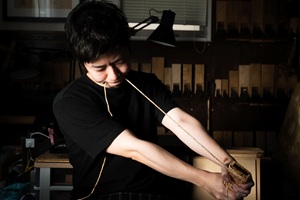
This online lecture centers on the craft of urushi brush making, presented by Seikichi Izumi X, a lacquer brush artisan from a lineage dating back to the 17th century. For over 370 years since Seki Izumi I, he has been the sole inheritor of traditional Edo techniques, using human hair as the primary material, passed down exclusively through oral tradition from generation to generation, and continues to preserve them to this day. Lacquer brushes are used to apply urushi to lacquerware such as Wajima-nuri, as well as to swords and armor. They also play an essential role in the restoration of ancient Japanese treasures, including temples and shrines, national treasures, and important cultural properties, where lacquer is widely used. The talk will explore where urushi is used, the essential role of brushes designed specifically for its application, and the importance of tools in traditional craftsmanship. |
|
|
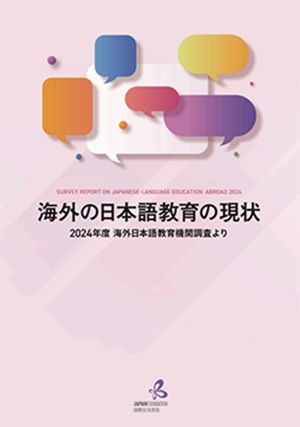
ANNOUNCEMENT The long-awaited results of the 2024 Survey on Japanese-Language Education Abroad in English have now been published on the Japan Foundation website. The report provides a comprehensive overview of the current global landscape of Japanese-language education, including recent enrollment trends, key developments, and related insights.
|
|
|
ON DEMAND Starting May 7, JFF Theater will release four new films for streaming as part of its monthly lineup update: *The 100th Love with You* (2017), a romance directed by Tsukikawa Sho; *Erased* (2016), a drama-mystery-romance directed by Hirakawa Yuichiro; *The Miracles of the Namiya General Store* (2017), a drama by Hiroki Ryuichi; and *Shodo Girls!!* (2010), a drama directed by Inomata Ryuichi. Viewers can watch trailers and explore these titles during the streaming period from May 7 at 11:00 AM (JST) to August 5, 2026 at 11:00 AM (JST).
|
 |
|
|
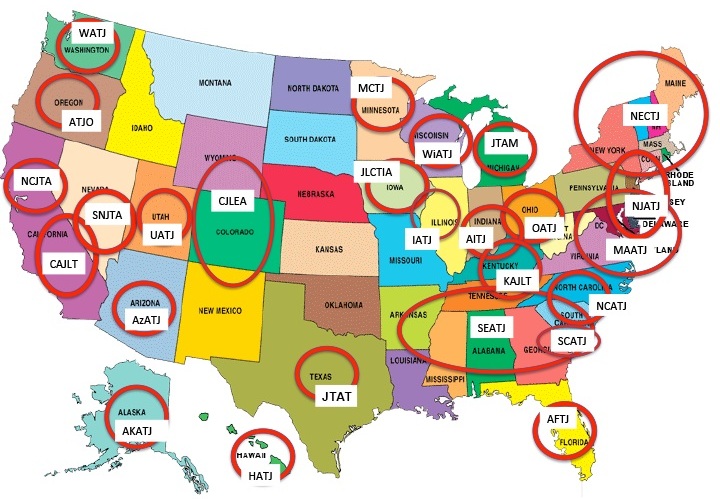
Joining a Teacher Association There are many teacher associations around the country that can provide networks, support, information, professional development opportunities, conferences, events, leadership opportunities, and many other benefits for their members. If you are part of a teacher association already, great! If you are not a member of a teacher association yet, it is highly recommended to join one. The American Association of Teachers of Japanese (AATJ) is a good place to start if you are looking for an association to join. You can find their website here: https://aatj.org/ AATJ also has many affiliate associations that might include a local teacher association near you. This map has some associations you can find: This page also has ways to connect with these associations: https://aatj.org/affiliates/ While this map does not have every Japanese teacher association in the US on it (only AATJ affiliates), it does provide a great snapshot of the nation at large. If you don’t see a teacher association near you on this list or if you want to know how to connect with an association, feel free to reach out to: jflaeducation@jpf.go.jp |
|
 |
|
|
Keisho Nihongo Support Programs Applications are now open for the 2026–27 Japanese Heritage Language (JHL) Support Program. Two types of support are available:
In previous years, the application period ran from September through January of the following year. Beginning in 2026, however, the application window will open in April. 2026–27 Application Period: April 1, 2026 – January 31, 2027 This revised timeline is intended to accommodate a broader range of JHL events and to provide schools with greater flexibility in integrating donated materials into their curricula. JHL schools and programs interested in applying for event support or book donations are encouraged to visit the following pages for more information: (Japanese): https://www.jflalc.org/jle-keishonihongo-programsj If you have any questions, please send inquiries to (jared_mcclellan@jpf.go.jp). |
|
 |
General Invitation to Join JF USA Digital Library We recently renewed and added many new books in coordination with our New York and Toronto offices for our patrons in the US and Canada. There have also been an uptick in the number of applicants as well, which shows that this is a very popular service. We have also updated the application survey and the confirmation emails are still going out once a week on Wednesdays by 6:00PM pacific time. If you register and do not receive a welcome email from us within a Wednesday of registering, please contact us so we can help you out. |
 |
|
|
2026-2027 Japanese Language Grants Now Available! Grant for Nationwide/Statewide/Region-wide Events for Learners Japanese Language Learners Event Grant Grant for Nationwide/Statewide/Region-wide Projects for Teachers Japanese-Language Education Project Grant Grants for Individual Japanese Language Programs Japanese Teaching Material Purchase Grant Advocacy Support Letter If your Japanese language program is in danger of being cut due to COVID-19, we will send a support letter to stakeholders (Superintendent, Principal, Dean, etc.). Click Here to contact us and select Anything Related to Japanese Education. |
|
Japanese Language Education Update 148
As the academic year draws to a close across much of the United States, May marks both a moment of celebration for graduating students and a period of reflection for educators. While some districts continue into June, the end of the school year offers an opportunity to look ahead and engage with new developments in the field of Japanese-language education. A key recent update is the publication of the 2024 Survey on Japanese-Language Education Abroad by the Japan Foundation. This report provides a comprehensive overview of global trends, including enrollment patterns and emerging developments, offering valuable insights for educators, administrators, and policymakers. Professional networks remain an essential resource for teachers. Organizations such as the American Association of Teachers of Japanese (AATJ) play a central role in supporting educators through conferences, professional development opportunities, and access to a nationwide community. AATJ’s network of regional affiliates further strengthens local engagement, making it easier for educators to connect, collaborate, and grow professionally. Support opportunities for Japanese-language programs are also available during the 2026–27 fiscal year for Japanese Heritage Language Organizations. Our programs offer two main forms of assistance: financial support for events and book donations to enhance teaching resources. The application period has been extended to run from April 1, 2026, through January 31, 2027, allowing greater flexibility for schools to plan activities and integrate resources. Funding opportunities are available through a range of grants for traditional education institutions. These include support for learner-focused events such as speech contests and cultural festivals, as well as grants for teacher-led initiatives like workshops, curriculum development, and research projects. Individual programs can also apply for funding to purchase teaching materials, helping to strengthen classroom resources. Finally, advocacy support continues to be available for programs facing challenges, including potential cuts stemming from the long-term effects of COVID-19. Through targeted outreach to institutional stakeholders, these efforts aim to sustain and advance Japanese-language education at all levels. Together, these developments highlight a dynamic and supportive environment for Japanese-language education, with resources, networks, and opportunities for both educators and learners. |
|

5700 Wilshire blvd, Suite 100
Los Angeles, CA 90036
jflainfo'at'jpf.go.jp
323.761.7510