

ART EXHIBITION at STEAM GALLERY
Sanzen Daisen Sekai 三千大千世界
Solo Exhibition by Heng Yi, Curated by Ann Shi
OPENING RECEPTION:
2:00 - 4:00 PM, Saturday, May 9, 2026
Register for opening reception
Free, RSVP Preffered
HOURS:
Mon-Fri 12:00pm-6:00pm, Sat 10:00am-3:00pm
Closed on Sundays & Holidays (May 25)
Silent Sitting Sessions · Every Saturday, 1:00 - 2:00 pm
Japan Foundation Los Angeles and a poco art present Sanzen Daisen Sekai (三千大千世界), a two-chapter solo exhibition by Heng Yi. Chapter I, Realm of Infinite Radiance, opens outward; Chapter II, Realm of Yūgen, turns inward. Together, they move along the axis of form and emptiness (色 / 空).
もし諸相を見て相に非ずとせば、すなわち如来を見る。
若見諸相非相,即見如來。
If one sees that all forms are not truly forms, the original nature reveals itself.
— The Diamond Sutra 《 金剛經》
Sanzen Daisen Sekai—the Great Trichiliocosm, or “Three Thousand Great Thousand Worlds”—describes a Buddhist cosmology of vast, interpenetrating worlds. Here, it unfolds as a field in tension between what appears and what resists resolution. To see all forms as not-form is not to reject the image, but to refuse its completion. The fully resolved image risks attachment (著相); the incomplete one keeps perception in motion.
As artist and scholar Liu Dan once remarked, traditions of image-making that do not fully close the form—what might be understood as a “2.5-dimensional” condition—allow perception to remain open. This is not an aesthetic preference but a metaphysical position rooted in the classical Chinese study of darkness and mystery (玄學), which understands 玄 (the dark, the unnameable, the threshold before form) as the ground from which all things arise and to which they return.
The fully resolved image forgets this ground. It presents itself as complete, and in doing so invites the mind to settle onto form as though it were final. The Diamond Sutra’s warning is precise: it is not the image that deceives, but our certainty about it. To see all forms as not-form is not negation but release—the opening of a gap through which perception can continue to move.
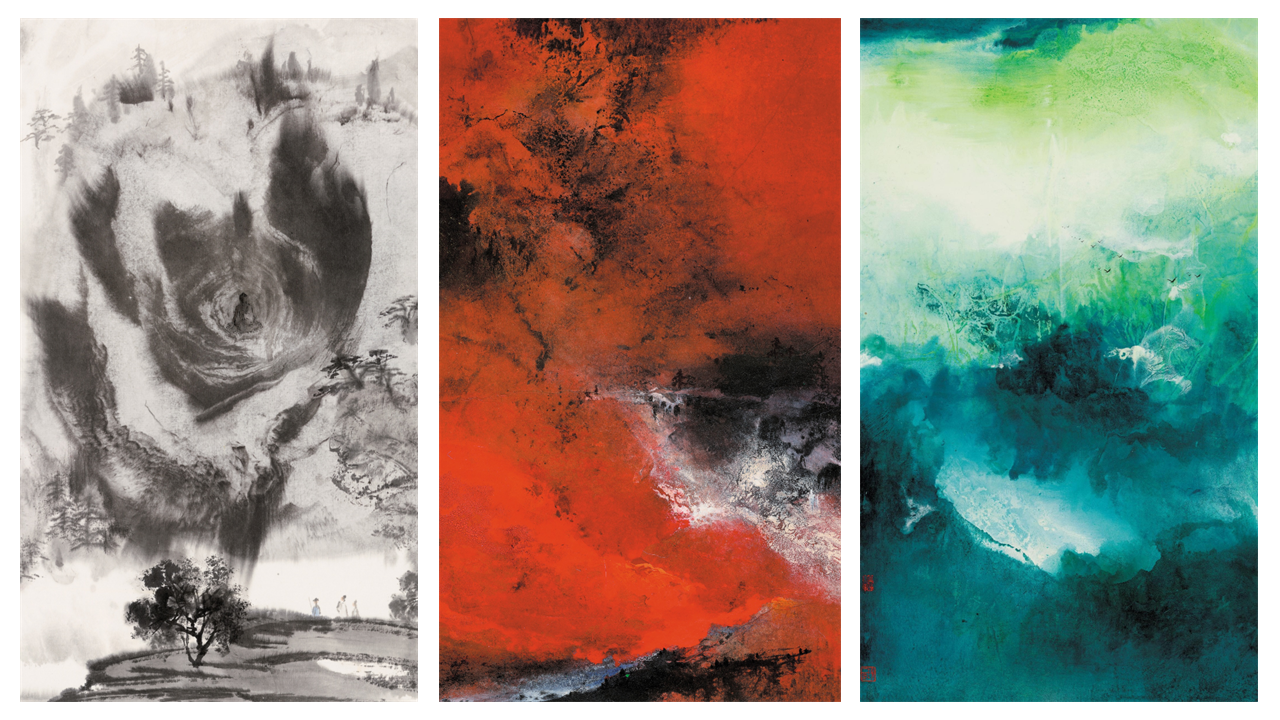
Heng Yi's paintings are built in this gap. The realm of brush and ink, the realm beyond form, the realm yet to come—none can be contained by language or writing. No reliance on words. That which cannot be spoken. They hover between emergence and dissolution, between seeing and unseeing. The paintings do not illustrate the sutra; they enact it. The image appears, but does not conclude. It is seen, but not grasped.
Chapter I: Realm of Infinite Radiance Steam Gallery · Japan Foundation Los Angeles
Chapter I I leans toward manifestation (顯像, appearing form), in dialogue with the “Manifesting Icons” exhibition by Michael VanHartingsveldtin in Murasaki Hall. Color, luminosity, and layered abstraction operate as a field of arrival. The image gathers density and light. Presence asserts itself through accumulation.
Chapter II: Realm of Yūgen a poco art · Culver City
a poco art turns toward seated meditation (zazen). Monochrome restraint and spatial quiet guide the viewer inward. The works resist immediate legibility. They require duration. They require stillness. If Chapter I speaks, Chapter II listens.
Between them, a circuit: manifestation and withdrawal, image and void, emergence and zazen. The exhibition does not resolve this movement. It sustains it.
ARTIST
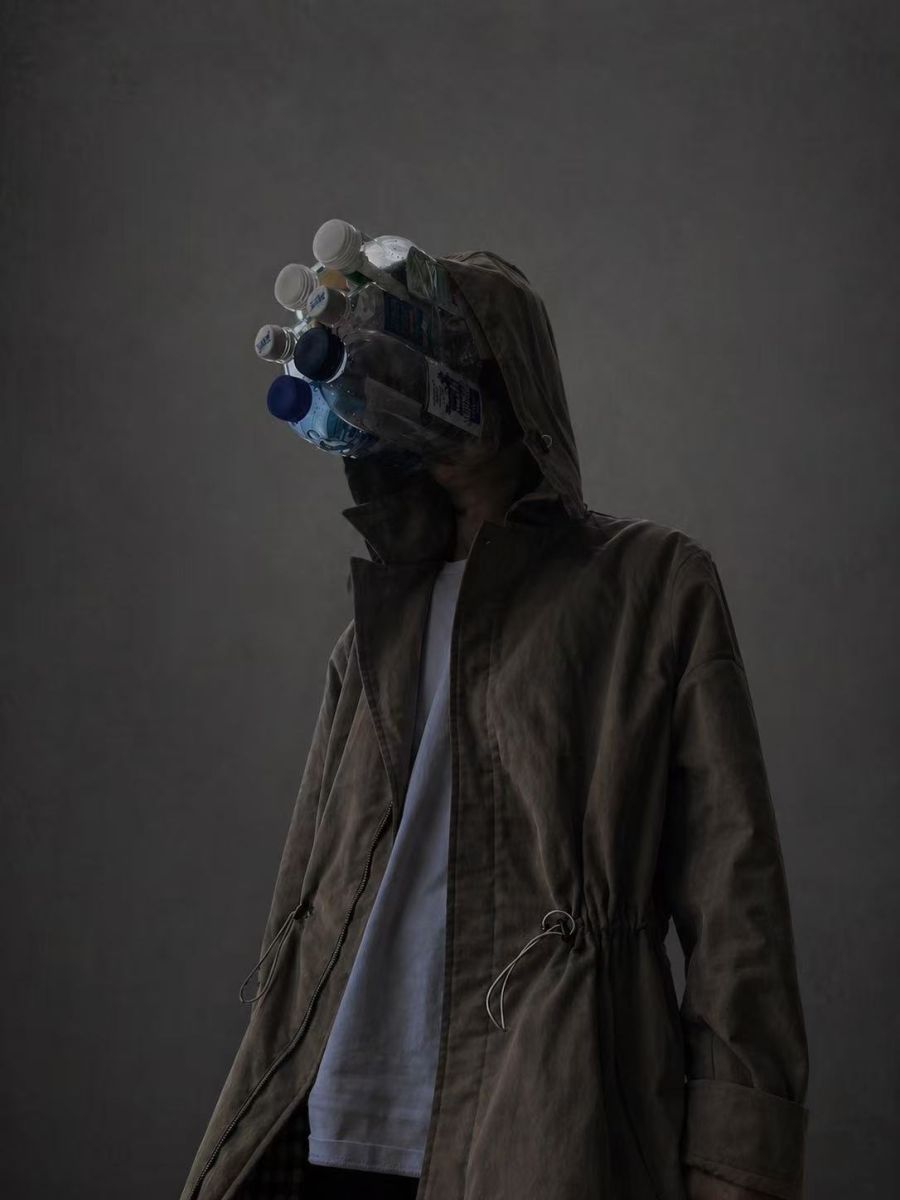
Heng Yi 珩
Heng Yi 珩一 is a Chinese-born artist living between China and the United States. His practice moves across ink painting, calligraphy, architectural drawing, and philosophical inquiry. Rooted in classical literati traditions yet shaped by Buddhist cosmology, science fiction, and Japanese animation, his work explores how image can approach states of perception described in Mahayana thought. Rather than depicting sacred figures directly, his paintings often emerge as atmospheres, thresholds, and provisional worlds.
Drawing from cave-temple spatial imaginaries and contemporary visual culture, his practice has been described as a form of speculative Buddhist cosmology, at times approaching what may be understood as a nascent mode of grotto futurism, where ancient metaphysics and imagined futures converge through ideas of emptiness (śūnyatā), interpenetration, and contemplative cultivation. Heng Yi’s ink paintings evoke spiritual presence through atmosphere, ambiguity, and spatial resonance. Working across luminous color fields and austere monochrome compositions, he draws from daily calligraphic discipline, mountain pilgrimage, and meditative study, alongside unexpected influences such as Gundam model-building and speculative visual culture. This interplay lends his practice an unusual sensibility: devotional and architectural, archaic and futuristic.
Engaging concepts such as the Three Thousand Great Thousand Worlds, emptiness, and emergence, his paintings suspend landscape, energy, and figuration in states of becoming. Through an expanded ink vocabulary, Heng Yi opens a contemplative field where ancient cosmologies and posthuman imagination quietly meet.
不破荊關不破禪,
硯缸攪翻墨雲寒。
百年故紙斫透未?
還向青煙印本來。
Translation:
Without breaking through the heights of the canon, Zen does not break open.
The inkstone churns, cold clouds of ink overturn.
Have a hundred years of paper been seen through?
Still, toward drifting smoke, the original nature reveals itself.
— Untitled by Heng Yi (2024)
CURATOR
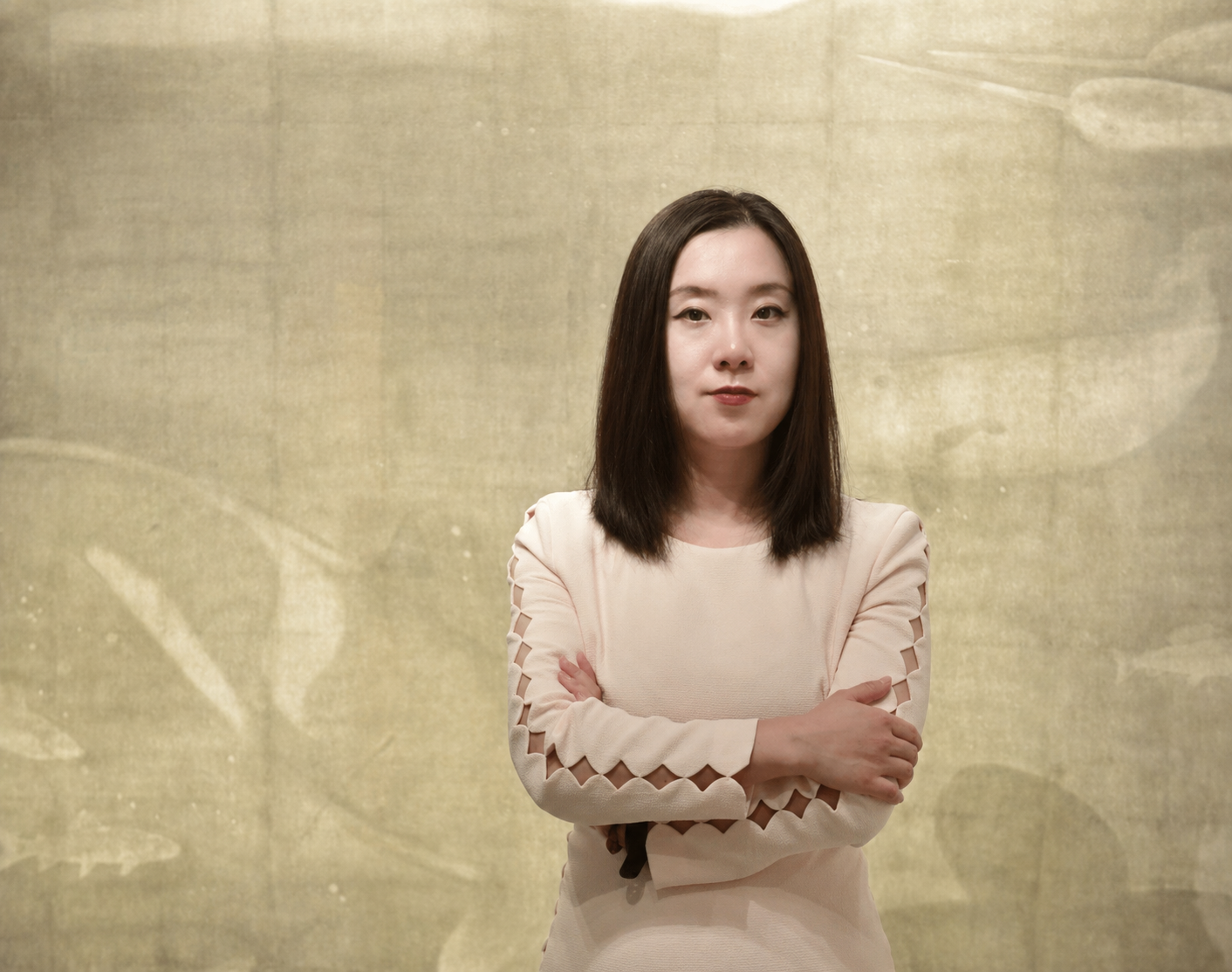
Ann Shi
Ann Shi is a nomadic curator, writer, and USPAP-compliant art appraiser working across contemporary art, Asian diasporic practices, and ritual-based exhibition making. She is founder of a poco art, an experimental curatorial platform through which she has organized projects including The Gateless Gate Trilogy (Ritual of Holding - Returning - Dissolving), Borders of Paradise: Liminal Creatures in the Floating World, and Nüwa’s Garden: A Summer Offering in Clay, Fire, and Water. Her exhibitions engage mythology, liminality, migration, and cosmological thought, drawing from Eastern philosophy, spiritual aesthetics, and speculative futures.
Shi previously served as Associate Curator at the Chao Center for Asian Studies and Project Assistant Curator at the Moody Center for the Arts, and continues as an Advisory Committee Member of the Houston Asian American Archive. Her curatorial projects have been presented in Los Angeles, New York, Houston, and beyond, with press coverage including Psychology Today, PaperCity, and Glasstire. Through a poco art, she develops exhibitions as forms of research, offering, and social encounter, foregrounding artists whose practices move between material experimentation and philosophical inquiry. She holds an MMath (Honours) from University of Oxford and an MA in Art Business from Sotheby's Institute of Art.
Related Programs
5700 Wilshire blvd, Suite 100
Los Angeles, CA 90036
jflainfo@jpf.go.jp
323.761.7510
 Date
Date Hours
Hours Venue
Venue Admission
 Inquiries