

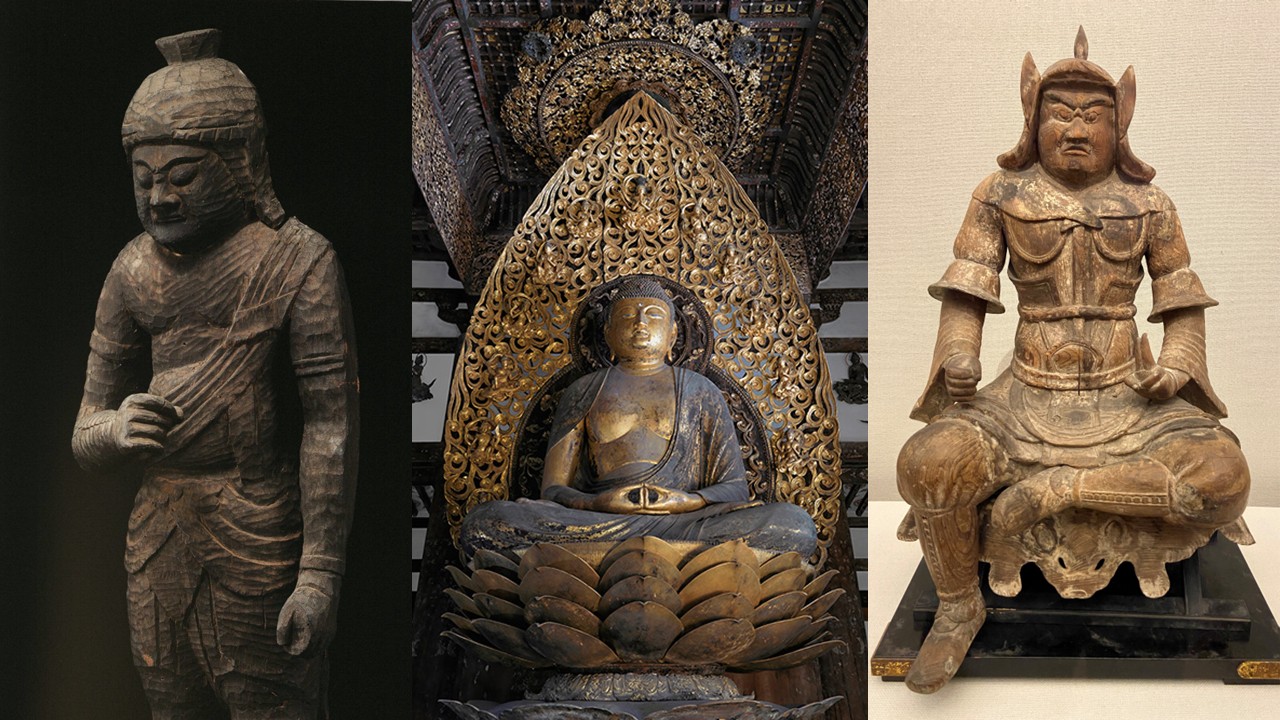
The gradual shift towards wood as the primary material for Buddhist sculpture during the eighth century established a Japanese sculpture-making tradition from which new aesthetics and techniques would emerge during the Heian period. From the seemingly incomplete arabori sculptures to the masterwork of the sculptor Jōchō at Byōdōin, sculpture reached new heights and reinforced the potential of wood as a medium.
This is the third session of six monthly classroom-style lectures that trace the historical development of sculpture in Japan. These lively conversations explore Japanese sculptures from various time periods and mediums through in-depth explanations about how and why they were made. Participants will also encounter obscure topics related to sculpture-making in Japan.
| Date | Topic | RSVP Link |
| November 12, 2025 | Before and During the Asuka Period | --- |
| December 3 | Nara Period | --- |
| January 7, 2026 | Heian Period | RSVP |
| February | Kamakura Period | --- |
| March | From the Muromachi to Edo Periods | --- |
| April | Modern and Contemporary Sculpture | --- |
 Michael VanHartingsveldt
A PhD candidate in Art History at the University of Kansas, Michael VanHartingsveldt is currently writing his dissertation about the Buddhist sculptor profession in medieval Japan. He has curated exhibitions, taught university courses, and presented public lectures about Japanese visual culture in California, Kansas, and Japan, and is now working as an Art and Culture Program Officer at the Japan Foundation, Los Angeles.

5700 Wilshire blvd, Suite 100
Los Angeles, CA 90036
jflainfo@jpf.go.jp
323.761.7510

 Date
Date Hours
Hours Venue
Venue Admission
 Inquiries